AMHERST – According to the Federal Drug Administration, almost half of the 6.1 million pregnancies in the U.S. each year are unintended.
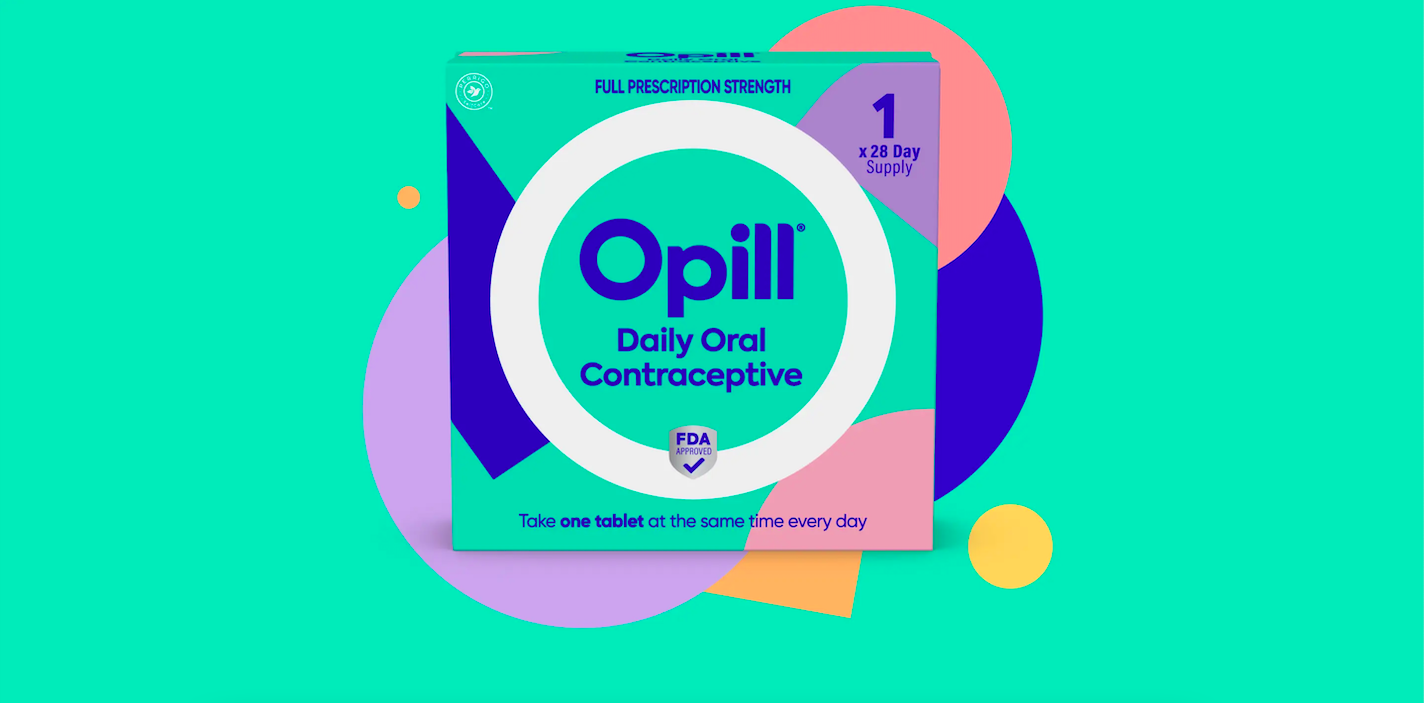
In July 2023, the FDA approved Opill, the first over-the-counter oral contraceptive pill. Opill shipments finally arrived at pharmacies this month and will hit the shelves in the coming weeks.
Oral contraceptive pills are one of the most widely used forms of birth control today. Taken daily, they are often used to prevent pregnancy, although they can also be taken to combat other health issues such as acne. Especially after the overturn of Roe v. Wade in June 2022, having birth control soon available without a clinician’s prescription is major in the fight for women’s reproductive rights.
Lauren Mallett, a sophomore at Emerson College, believes over-the-counter birth control is necessary with the current abortion restrictions across the country. “I definitely think it’s important to have over-the-counter birth control, especially given the current political state regarding reproductive rights,” she said.
Ash Finnegan, a junior at UMass Amherst, agrees with this importance. “I think the overturn of Roe v. Wade has made it even more necessary for people to take steps like this,” she said. “I think more people in anti-abortion states will feel a need to take [birth control] than they would’ve before, since it may be their only chance to not be forced to have a baby.”
Growing up in Alabama, Finnegan said that she understands both sides of abortion access and why this leads to the necessity of having easier access to birth control. According to the New York Times, Alabama currently has some of the strictest abortion restrictions in the United States.
“I think a lot of people sh*t on the South because they think its residents want this, but obviously half of the South is women/people assigned female at birth, and I don’t know a single woman who thinks banning abortions is good,” Finnegan said. “Our lawmakers and politicians have almost full control because of Gerrymandering, so even though most of my friends are left-leaning, they have no power, which is why abortions get banned.”
Mallett fully supports access to abortion, but hopes that having more accessible birth control, such as through Opill, will help to reduce unwanted pregnancies and thus the need for abortions.
“[This] will in turn save the lives of many people who would otherwise have to have illegal/life-threatening abortions that aren’t done safely or in proper medical facilities,” she said. “It will hopefully also help because of the states trying to legally reprimand people who have abortions, as they won’t have to go through that process.”
Finnegan is glad that her friends in the South will be able to take advantage of this over-the-counter birth control option if it feels right to them.
“I do really hope the narrative changes around abortion in the South because right now it’s super ‘victim-blamey’ and shuts out so many women who suffer from our legal system,” she said.
Mallett added, “For people who live in areas that are pulling back on legal rights for people with a uterus, or for impoverished areas that may not have the resources to support clinics like Planned Parenthood, [over-the-counter birth control] will make a huge difference. And not only for pregnancy prevention but for the other health conditions it can help with, such as POTS or endometriosis,” she emphasized.
The importance of accessible birth control reaches far and wide for many health issues.
Michelle Hastings, a mother in Newburyport, said that people often think it’s important to have easy access to birth control just for birth control. “They don’t always realize it’s literally life-saving if you are anemic,” she said. Her 15-year-old daughter is currently on birth control for this reason.
“Her period was so bad, and she’s so tiny that she was becoming anemic,” she explained. And for herself, she had to have iron transfusions via IV for a year. “I wound up on [birth control] to skip periods and stop it. I was so bad they wanted to hospitalize me at one point and couldn’t believe I was able to talk, my blood count was so low.”
Hastings said that if access to birth control becomes difficult or impossible in some areas, it can be life-threatening in ways that don’t even involve pregnancy.
“It makes me crazy that it’s called ‘birth control’ when it does so much more than that. It’s a weird stigma for [my daughter] I think sometimes,” she said.

Anya Epstein, a sophomore at UMass Amherst, began taking oral contraceptives for hormonal acne as well as pregnancy prevention. “The greatest difficulty for that case was explaining to my mom why I had it, more a social dilemma than a systemic one, but still one nonetheless,” she said.
Normally, people need to make an appointment with a healthcare provider and obtain a prescription before having access to oral birth control pills. Having over-the-counter birth control makes it much more accessible to people who might face barriers in the process of obtaining a prescription.
“I think it can be really hard for people to block out time to get doctor’s appointments as well as pay for it,” said Finnegan. “It can also be really hard to even find a healthcare provider, so many places will put you on a waitlist that can take up to a year.”
For many, getting on birth control can be a long, tedious process.
Sila Paniker, a sophomore at UMass Amherst, explained that it took her almost a year to get an appointment with her gynecologist. “I think there can definitely be a problem with access…appointments are usually super far out, and for some people, just getting to the doctor in general,” she said.
Katie Maldenauto, a 21-year-old from Boston, said that getting on birth control was a long, lengthy process for her as well.
“I had to go to the doctor for my birth control and had to risk being late for work in order to get an appointment…I have the Nexplanon, so it had to go into my arm,” Maldenauto explained. “While the birth control itself has been fine, the process of it is really tedious. Having to go through a bunch of lowkey unnecessary steps just to ensure I am safe is kind of wild.”
Obtaining birth control can also be difficult for those who lack access to quality healthcare. Having Opill easily available in drug stores to just about anyone would greatly reduce healthcare barriers for those who want to use an oral contraceptive.
Epstein says that having birth control over the counter makes it accessible to everyone, “including those who can’t obtain medical care for whatever reason.”
“It’s a much shorter process as well, not having to wait for an appointment, for the doctor to fill the script, waiting for the prescription to be ready, and then going to pick it up or wait for it to be delivered,” she added.
Finnegan mentions that she feels privileged to live in a state where she could easily get access to an abortion or Plan B pill if she needed one. However, being in Massachusetts, she says, “I am still terrified by the rhetoric that I hear in regard to abortion and the way male politicians feel entitled to my body and life.”
As for the future, while many agree that having over-the-counter birth control is beneficial as far as preventing unwanted pregnancies, widespread education about safe sex still lies at the heart of the problem.
“I would hope that teen pregnancies begin to go down, but I think that education about birth control and sexual wellbeing has to be improved across the country for that to be the case,” Epstein said.
“I will say, I think society’s attitude toward birth control needs to change,” Finnegan stated. “Right now, almost every woman I know has been asked by a man they were sleeping with if they were on birth control so that he wouldn’t have to wear a condom. I think that birth control is amazing, but the emphasis needs to shift away from women’s responsibility until the responsibility is seen as equal.”
Finnegan said that she thinks the way to shift this attitude towards birth control is by putting more emphasis on using condoms in addition to birth control, since using oral contraceptives as a replacement for condoms doesn’t reduce STI transmission in non-monogamous hookups.
“I also hope that having more access doesn’t pressure more women into taking birth control if they feel it isn’t right for them, for any reason. And I also really hope more research goes into women’s health so that people don’t have to experience side effects like the ones I had, or even more serious ones like blood clots,” she said. When Finnegan started taking oral birth control a few years ago, she wound up having problems and decided that oral contraceptives were not for her.
“When [oral birth control] was first suggested by my male dermatologist, I asked him if it would make me gain weight. He told me that it was a myth and it was just a correlation, so I believed him and ended up gaining 40 pounds,” she said. “I eventually got off of it, and it took me about 2 years to lose all the weight, and my metabolism was never the same again.”
“Even though it’s not for me, I’m really happy that a lot of women and people assigned female at birth will be able to take it without having to go through someone else,” Finnegan said.
Paniker says that she believes having this over-the-counter birth control will be controversial because “birth control is often grouped with abortions,” which has become a politically charged issue throughout the country, especially in recent years. Many people take birth control for other health reasons as well.
“Having an over-the-counter option might be helpful by giving people their own choice and direct access, but there will be pushback,” she said.
Maldenauto also said she thinks there’s going to be some “craziness” with this introduction of Opill, considering it is the first time there’s even been the idea of over-the-counter contraceptives. “I do feel, though, that it’s going to be impactful in a way where there will be future over-the-counter birth controls,” she adds.
Having Opill easily available over the counter will create a safer sex environment, as well as make it easier to mitigate certain health issues. It will also reduce unwanted pregnancies and therefore the need for abortions.
Opill will be available at most retail pharmacies across the United States in early 2024, although rollout details are still emerging.
Be First to Comment